FOR HOME BUYERS
THINKING ABOUT MOVING FROM A KIRKLAND CONDO TO A SINGLE-FAMILY HOME? WHAT TO CONSIDER BEFORE YOU MAKE THE MOVE
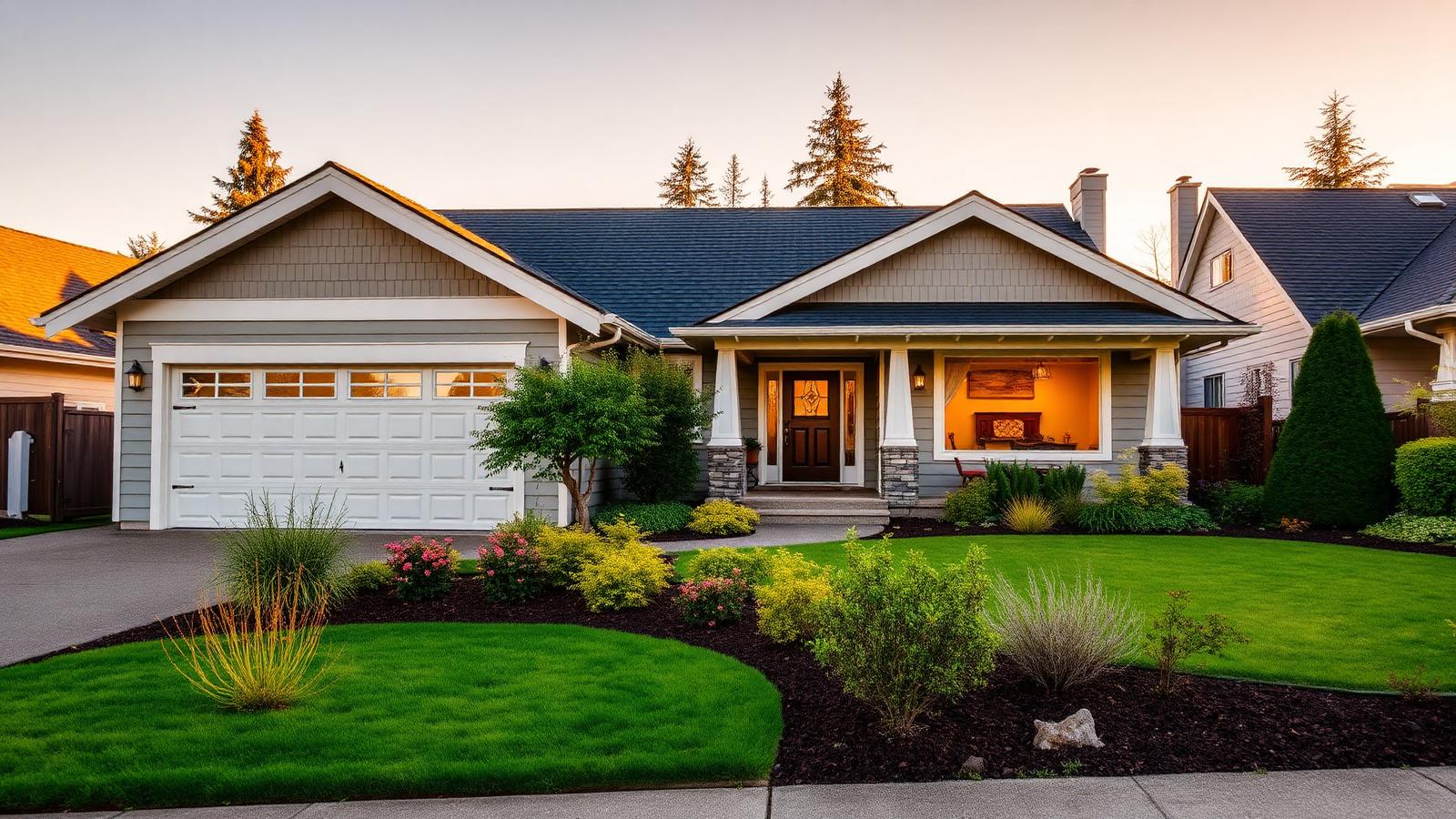
A lot of Kirkland condo and townhome owners hit the same moment: the condo worked beautifully for a few years, and then life changed. A second remote job. A baby on the way. Parents visiting for two weeks. A hobby that has taken over the guest space. And every month, an HOA statement that keeps climbing.
Moving from a condo to a single-family home in Kirkland is one of the most common moves I help clients make, and it's rarely just a math problem. It's a mix of lifestyle, monthly cost, equity, timing, and risk tolerance. This guide walks through the questions worth answering before you list anything or tour a single house.
1. HAVE I ACTUALLY OUTGROWN MY CONDO?
Start with the why, not the price. Most people don't wake up wanting a bigger mortgage, they want to stop making a specific daily compromise. If several of these sound familiar, you've probably outgrown your space rather than simply gotten restless:
- You need a dedicated office (and you're working from the dining table right now)
- Two people are on video calls in the same room
- Your family is growing, or a baby is on the way
- You have no real guest space when family visits
- You're tired of shared walls, shared ceilings, and elevator logistics
- You want a yard for kids, a dog, or a garden
- You want a garage for parking, storage, or a workshop
- You need storage that isn't a 4x8 cage in the parking garage
- You want room for hobbies: a Peloton, a workbench, an instrument, gear
- You simply want more separation between living, working, and sleeping spaces
Write down the two or three that bother you most. Those become your non-negotiables, and they're what keep you from buying a house that's bigger but doesn't actually fix anything.
2. HOA DUES VS. HOME MAINTENANCE: THE COST COMPARISON NOBODY RUNS
This is where the condo-to-house conversation gets interesting. Buyers often assume a single-family home is dramatically more expensive to own because the purchase price is higher. But condo ownership carries a monthly cost that doesn't disappear when the mortgage is paid off — and in the Puget Sound region, those dues have risen sharply.
WHY KIRKLAND-AREA HOA DUES KEEP CLIMBING
- Reserve study requirements: Washington condo associations are expected to fund reserves for major components — roofs, siding, decks, elevators, plumbing. Underfunded buildings are raising dues to catch up.
- Insurance: master policy premiums for multifamily buildings have increased substantially in recent years, and that flows straight into monthly dues.
- Building envelope and deck repairs: common in Pacific Northwest construction, and often paid for through dues increases or special assessments.
- Labor and materials costs for landscaping, janitorial, and management contracts.
The result: it's not unusual to see Kirkland condo dues in the several-hundred-dollars-per-month range, with higher-amenity or older buildings well beyond that — plus the possibility of a special assessment on top.
WHAT YOU ACTUALLY PAY FOR ON A SINGLE-FAMILY HOME
A house doesn't remove those costs — it moves them onto your calendar and your control. You budget for them yourself:
- Landscaping and yard care (DIY or a monthly service)
- Roof replacement, typically a once-every-20-to-30-years expense you save toward
- Exterior paint, gutters, siding, and deck upkeep
- Furnace, water heater, and appliance replacement over time
- Homeowners insurance on the full structure, not just your interior
- Occasional surprises: a tree, a drain line, a leak
A common planning rule of thumb is to set aside roughly 1% of a home's value each year for maintenance, though actual costs vary widely by the home's age, condition, and how much you do yourself. The honest takeaway: when you compare monthly HOA dues against a realistic maintenance reserve, the gap is often much smaller than people expect. For some owners, the house is the cheaper carrying cost once dues are factored in.
The right comparison isn't mortgage vs. mortgage. It's mortgage + taxes + insurance + HOA on the condo against mortgage + taxes + insurance + maintenance reserve on the house.
APPRECIATION: WHY SINGLE-FAMILY HOMES USUALLY PULL AHEAD
Over long holding periods, single-family homes in the Kirkland market have generally appreciated more strongly than condos. The reason is structural: with a house you own the land, and land is the scarce part. Condo values are also more sensitive to HOA health due to rising dues, deferred maintenance, litigation, or lender-unfriendly rental caps can all cap what a buyer will pay.
That doesn't make condos a bad purchase. It does mean that if you're planning to hold for seven to ten years or more, the equity math often favors the house, which is part of why the higher price tag deserves a longer view than a single monthly payment.
3. WHAT DOES MY KIRKLAND CONDO EQUITY ACTUALLY BUY ME?
Your next-home budget isn't just your income or your preapproval number. It's a combination of your current home's value, your mortgage balance, cash on hand, your financing capacity, and, most importantly, the monthly payment you're genuinely comfortable carrying.
A SIMPLE HYPOTHETICAL
- Condo value: $800,000
- Mortgage balance: $450,000
- Estimated gross equity: $350,000
That $350,000 isn't what lands in your account. Selling costs such as brokerage compensation, excise tax, title and escrow, any pre-sale prep or repairs plus moving expenses come out first. Depending on the deal, it's realistic to plan on a meaningful share of gross equity going to those costs, so the number you carry into the next purchase might be closer to $290,000–$310,000 in this example.
Then you decide how to deploy it: a larger down payment to keep the monthly payment manageable, a smaller down payment with cash reserved for immediate improvements, or something in between. This is the single most useful exercise to run before you tour homes, because it converts a vague "could we do this?" into an actual number.
4. WHAT DOES THE NEXT STEP LOOK LIKE IN KIRKLAND?
Kirkland isn't one market. It's a collection of neighborhoods with very different typical values. Zillow's June 2026 data illustrates the spread well: South Juanita around $857K, North Juanita around $975K, Finn Hill around $1.23M, Highlands around $1.65M, and Norkirk around $1.94M. That's why a single citywide number isn't very useful when you're planning a move-up.
Typical Home Values by Kirkland Neighborhood
Zillow, June 2026 — illustrative typical values
AROUND $1M–$1.3M
At this level you're generally looking at Juanita, parts of Finn Hill, Totem Lake, Kingsgate, and newer townhomes closer in. Expect older split-levels and ramblers that may need updating, smaller lots, or a well-built townhome with a garage and a small yard. This is often the first real step out of condo living: your own front door, your own roof, no shared walls.
$1.3M–$1.6M
Condition and layout improve noticeably. You start seeing updated kitchens, four bedrooms or a true bonus room, a two-car garage, and usable yards. Finn Hill, North Juanita, Rose Hill, and Bridle Trails-adjacent pockets show up frequently here. This is the sweet spot for many move-up buyers coming out of a condo with solid equity.
$1.6M–$2M
Now location and lot enter the equation more heavily — closer-in neighborhoods like Norkirk, Highlands, Houghton edges, and newer construction. You're buying a combination of space, a better commute, and either a recent remodel or a newer build that needs nothing for a decade.
$2M AND ABOVE
The buyer pool narrows and the property types shift: newer luxury construction, larger lots, view properties, walkable Market Street and Houghton locations, and homes closer to the lake. Homes here can sit longer because fewer buyers qualify, which sometimes means more negotiating room than at lower price points.
5. WHAT ARE KIRKLAND BUYERS WHO WANT MORE SPACE LOOKING FOR IN 2026?
Across the Eastside, functionality matters as much as raw square footage. The recurring priorities I hear from clients trading a condo for a house:
- Three to four bedrooms
- A dedicated home office (ideally with a door)
- A larger, more usable kitchen
- Real storage: closets, a pantry, an attic or crawlspace
- A garage
- A private yard
- A guest bedroom that isn't the office
- A primary suite with its own bathroom
- A flexible bonus room that can change purpose over time
- Better indoor/outdoor living such as a patio, a deck, a covered space for PNW weather
- A shorter commute to Bellevue, Redmond, or Seattle
- Neighborhood and community feel
- Access to the schools they want
6. SHOULD I SELL FIRST OR BUY FIRST?
This is the question that stalls most condo-to-house moves. Nobody wants to sell and end up with nowhere to live — and nobody wants to own two properties by accident. Both paths are workable; they trade different risks.
SELLING FIRST
- More financial certainty — you know exactly what you have to work with
- A cleaner, stronger offer when you do find the house
- Less financial risk and no double carrying cost
- The trade-off: you may need temporary housing or a rent-back
BUYING FIRST
- You don't have to rush the sale of your condo
- You can move directly from one home to the other
- You can prep and stage an empty condo, which often sells better
- The trade-off: it requires stronger financing or cash reserves and carries more risk
STRATEGIES THAT BRIDGE THE GAP
- Contingent offers i.e. writing an offer contingent on the sale of your condo
- Bridge financing, which is short-term borrowing against your current equity
- A HELOC opened before you list, to access down payment funds
- A negotiated rent-back so you stay in the condo after closing
- Short-term or temporary housing between transactions
- Coordinating simultaneous closings so both transactions land the same week
Which of these is realistic depends on your lender, your reserves, and how competitive the specific house is. It's worth mapping out before you fall in love with a listing.
7. SHOULD I KEEP MY CONDO AND RENT IT OUT?
Plenty of clients ask whether they should keep the condo as a rental instead of selling. There's no universal right answer, but there is a clear set of factors.
KEEPING IT MAY MAKE SENSE IF
- The rental economics work: rent comfortably covers mortgage, taxes, insurance, HOA dues, and vacancy
- You're genuinely comfortable with landlord responsibilities (or budgeting for management)
- The HOA permits rentals and isn't at its rental cap
- You have adequate cash reserves for vacancies and assessments
- You don't need the equity to buy the next home
- Holding real estate long term fits your broader investment strategy
SELLING MAY MAKE MORE SENSE IF
- You need the equity to make the next purchase work
- The rental return is weak after HOA dues are subtracted
- HOA rental restrictions, caps, or waitlists complicate things
- You want a simpler financial picture and one mortgage
- Concentrating that much net worth in one market and one property type doesn't sit right with you
- Capital gains exclusion timing on your primary residence favors selling now
Run the numbers both ways with your lender and your CPA before deciding. The right answer is personal — and it changes with a few hundred dollars of monthly HOA dues.
8. IS NOW A GOOD TIME TO MOVE UP IN KIRKLAND?
The current Kirkland market is genuinely interesting for move-up buyers. Redfin's recent data showed a median sale price around $1.28M with homes selling in roughly 13 days for the three months ending May 2026, and Zillow showed 486 homes for sale in June with a median sale price around $1.24M. Desirable, well-priced homes still move quickly.
At the same time, broader King County inventory was up substantially year over year in July while pending sales were down, meaning buyers generally have more choice and more breathing room than during the ultra-competitive years.
For a move-up buyer, that combination is favorable. You're selling into a market where good condos still attract buyers, and buying into one where you're less likely to be one of five offers on every house. More importantly, when you move up within the same market, you're not really betting on prices — you're trading one position for another, and a softer market can actually work in your favor because the more expensive home typically has more room to negotiate than the less expensive one.
A SHORT CHECKLIST BEFORE YOU START
- Write down the two or three compromises you most want to eliminate
- Pull your current HOA dues, recent increases, and any pending special assessments
- Get a realistic value estimate on your condo and calculate net proceeds after costs
- Talk to a lender about payment comfort, bridge options, and a HELOC before listing
- Pick the Kirkland price band that matches your real budget, then tour in it
- Decide your sell-first vs. buy-first strategy before you write an offer
LET'S LOOK AT YOUR NUMBERS BEFORE YOU DECIDE ANYTHING
If you're currently a Kirkland condo or townhome owner and wondering what your equity could translate into, I can help you look at the numbers before you make any decisions. We can estimate your current home's value, look at your likely net proceeds, and identify the Kirkland neighborhoods and price points that make sense for your next move.
- Veronica Morss — Real Estate Broker, Brokered by eXp Realty
- Phone: 206-853-3491
- Email: veronica@veronicamorss.com
CURIOUS WHAT YOUR CONDO EQUITY COULD BUY IN KIRKLAND?
Reach out for a no-pressure conversation. We'll estimate your condo's value, map out your likely net proceeds, and look at the Kirkland neighborhoods and price points that fit your next move.
CONTACT VERONICA